

What Integration Actually Feels Like
Updated: 7 hours ago

The ceremony ends in the morning. The room is cleaned, breakfast is served, and eventually you go home.
That can be the strange part.
You may have spent hours experiencing something intense, unfamiliar, or difficult to explain. Then, suddenly, you are expected to return to ordinary life: answer messages, go to work, make dinner, and continue with the things you were doing before. The experience may feel finished. The process of understanding it usually is not. Integration is what happens when you begin making sense of the experience—and deciding what, if anything, belongs in your life afterward.
What Integration Actually Feels Like - The Part Nobody Posts About
A lot of conversations about Ayahuasca focus on the ceremony itself: the visions, the emotions, the sense of connection, the difficult moments, or the feeling that something important has happened.
Less attention is given to the days afterward.
You might feel clear and rested. You might feel tired, emotionally open, or unusually quiet. You might feel disappointed because the experience was not what you expected. You might feel grateful and confused at the same time.
Some people describe a strong sense of meaning. Others are left with questions they cannot immediately answer.
There is no single emotional response that proves a ceremony was successful.
The First Few Days
The first days after a ceremony are often about returning to your body and your routine.
You may notice changes in:
Sleep and energy
Appetite
Mood
Emotional sensitivity
Your desire for conversation or solitude
The way you respond to familiar situations
Some people want to talk about everything. Others do not want to explain anything yet.
Both responses can be understandable. You do not have to immediately turn the experience into a story, a lesson, or a decision. Rest, simple meals, hydration, and a quieter schedule can give you space to settle.
If you experience severe or persistent physical symptoms, significant confusion, extreme agitation, or concerning changes in your mental state, seek appropriate medical or mental health support. Integration is not a substitute for care.
When the Experience Starts to Feel Ordinary

One of the less discussed parts of integration is that ordinary life can feel ordinary again.
The ceremony may have felt important, but the dishes still need washing. Your inbox is still there. Your relationships still have their existing patterns.
That does not mean the experience was meaningless.
It means that insight and change are not the same thing.
You may understand something about yourself without knowing what to do with that understanding. You may recognize a pattern without immediately being able to change it. You may feel motivated for a few days and then find that the motivation becomes less dramatic.
This is often where the real work begins.
Not Every Insight Needs to Become a Decision
After an intense experience, it can be tempting to make immediate changes:
End a relationship
Quit a job
Move to another country
Stop taking medication
Make a major financial decision
Announce a completely new direction in life
Sometimes a change is genuinely necessary. But urgency is not always clarity.
Give important decisions time to settle. Write down what you are considering. Talk to someone you trust. If the decision involves your health, medication, finances, or safety,
involve the appropriate professional.
You do not have to act on every thought simply because it arrived during a ceremony.
What Integration Can Actually Look Like
Integration is often much less dramatic than people expect.
It may look like:
Having a difficult conversation you have been avoiding
Recognizing when you are repeating an old pattern
Saying no without overexplaining
Returning to therapy
Establishing a more consistent sleep routine
Spending less time distracting yourself
Making room for grief that you previously avoided
Asking for help
Changing one practical habit
Learning to tolerate uncertainty without immediately trying to resolve it
Sometimes the change is internal and difficult to describe. Sometimes it is visible in a very ordinary decision. There is no requirement to produce a transformation story.
The Emotional Middle Ground
Not everyone feels better immediately.
You may feel sadness, vulnerability, frustration, or uncertainty. You may question what you experienced or wonder whether you interpreted it correctly.
You may also feel nothing particularly unusual.
That does not automatically mean something went wrong. Experiences vary, and their meaning may change over time.
At the same time, difficult or persistent symptoms should not be romanticized as “part of the process.” If you are struggling, reach out for appropriate support rather than assuming you simply need to endure it.
Why Support Afterward Matters
A ceremony can bring up material that is difficult to process alone.
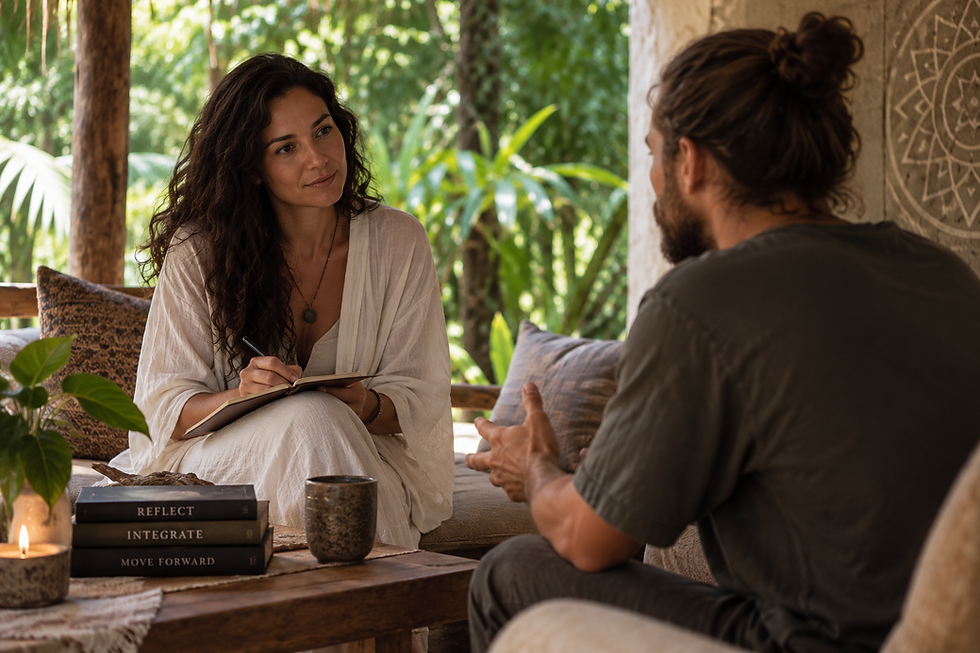
Integration support gives you a place to discuss what happened without needing to make it sound extraordinary or positive. It can help you separate what you experienced from the conclusions you are drawing about it.
At Lumina, post-ceremony support is intended to help you reflect, ask questions, and consider practical next steps. It is not about telling you what your experience means or prescribing a particular interpretation.
You remain the person responsible for deciding what belongs in your life.
The Weeks After
The weeks after a ceremony are often when the experience becomes more connected to everyday life.
What Integration Actually Feels Like - You may begin noticing:
Which insights remain meaningful after the initial intensity fades
Which habits are difficult to change
Which relationships feel different
Where your expectations were unrealistic
What you need more support with
What you are ready to leave alone for now
This is where patience becomes useful.
You do not need to resolve everything at once. A small, sustainable change is often more valuable than a dramatic promise that lasts three days.
What If Nothing Seems to Have Changed?
Sometimes people expect a ceremony to produce a clear answer or an obvious shift. When that does not happen, they may assume they did something wrong.
You may not have had the experience you expected. You may not understand it yet. You may not feel different at all.
That is worth acknowledging honestly.
An experience does not have to produce a dramatic outcome to be worth reflecting on.
And you do not have to force meaning onto it because you believe you are supposed to have changed.
Give yourself time. If questions remain, discuss them with someone qualified to support you.
What If You Feel Worse?
If you experience ongoing distress, significant anxiety, depression, confusion, sleep disruption, or other concerning changes after a ceremony, seek professional support.
Do not assume that worsening symptoms are automatically a sign of healing. Do not stop prescribed medication or change treatment without consulting your healthcare provider.
Integration can include difficult emotions, but it should not require you to ignore your safety or wellbeing.
A More Honest Definition of Integration
Integration is not about keeping the ceremony alive forever. It is about allowing the experience to become part of your life without letting it dictate every decision.
Sometimes that means making a change. Sometimes it means returning to something you already knew was important. Sometimes it means accepting that you are still uncertain.
The ceremony may end in the morning. Understanding what happened—and deciding what to do with it—can take much longer.
That is not a problem to solve quickly. It is part of the process.
This article is for general information only and is not medical or mental health advice. If you experience concerning physical or psychological symptoms after a ceremony, seek appropriate professional care.


Comments